If you’ve tried working remotely in Marietta for more than a few days, you’ve probably already run into the same problem most people do.
Working from home sounds great in theory, until your focus starts slipping. Coffee shops feel like a good backup, until you’re competing for outlets and trying to take a call over a blender. At some point, “working from anywhere” starts to feel a lot less productive than it did at the beginning.
The reality is, where you work matters more than most people expect. And if you’re in Marietta, you actually have a few solid options. It just depends on what kind of workday you’re trying to have.
This guide breaks down the best places to work remotely in Marietta, what each one is actually good for, and how to decide what makes the most sense for you.
The Reality of Remote Work That No One Talks About
Remote work didn’t fail. But the idea that you can work just as effectively from anywhere? That’s where things get a little more complicated.
Between 2019 and 2021, the number of people working from home in the U.S. more than tripled, jumping from 5.7% of the workforce to 17.9% (U.S. Census Bureau). Even after companies started bringing people back, that number never returned to where it was. As of 2023, 13.8% of workers are still fully remote, and many more are splitting their time between home and somewhere else (U.S. Census Bureau).
Most people rotate between three environments:
- Their home: the most cost effective option in most cases but has the highest probability for loneliness.
- A coffee shop: This is still a good low cost option, however, these places tend to get noisy and not practical for a day to day dedicated set up.
- Anywhere with WiFi and a chair: A temporary solution at best. Not suitable for professional meetings, zoom calls, or consistent productivity.
And that’s not just anecdotal. In one of the largest remote work surveys, about 80% of remote workers said they primarily work from home, but many still rely on other spaces like coffee shops and coworking environments throughout the week depending on what their day looks like (Buffer State of Remote Work).
And at first, that flexibility feels like a win. But over time, patterns start to show up.
At home, it’s harder to stay focused than most people expect. Even if you’re disciplined, the line between work and everything else starts to blur. Research by Gloria Mark at University of California Irvine found that it takes an average of over 20 minutes to fully refocus after an interruption (study link), and nearly half of those interruptions are self-initiated. That means the quick decisions to switch laundry, unload the dishwasher, or check something around the house quietly fragment your day. Remote workers often shift 30 to 60 minutes of their workday into personal tasks (WorkTime remote work statistics), but the real cost isn’t the time spent. It’s the constant reset that keeps you from ever getting into a true flow state, which is where the most meaningful work actually happens.
Coffee shops solve that problem for about two hours. A moderate level of ambient noise can improve focus and creative thinking, which is why so many people default to working from cafés. But that benefit has limits. As noise levels rise, productivity drops, and practical challenges start to take over. Seating becomes unpredictable, outlets are limited, and the environment is designed for turnover, not sustained work. Before long, you’re adjusting your schedule around availability instead of structuring your day around getting work done.
None of these are bad options. They’re just not built for consistency.
And that’s usually the point where people start looking for something more effective.
Coffee Shops Around Marietta Square

Coffee shops like Sessions Stand and Cool Beans are still one of the most common places people go to work remotely, especially around Marietta Square. They’re easy, familiar, and there’s something about the energy of being around other people that makes it easier to get started.
They work best when your day is flexible. If you’re knocking out emails, handling light admin work, or just need a change of scenery, a coffee shop can be a great reset. But the experience isn’t consistent enough to rely on for a full workday.
Seating comes and goes, especially during peak hours. Outlets aren’t always available, and WiFi performance can shift as the space fills up. Then there’s the reality of shared space. Taking calls, joining meetings, or trying to focus for long stretches can quickly become uncomfortable or impractical.
Coffee shops are a great option when you need something casual and convenient, but they’re not built to support structure, privacy, or long-term focus.
Best for: Short work sessions, light tasks, quick changes of scenery
Not ideal for: Calls, meetings, or consistent daily work
Libraries and Quiet Public Spaces

If your goal is focus, libraries like Switzer Library and Sewell Mill Library & Cultural Center are some of the most reliable options in Marietta.
They’re quiet, structured, and free, which makes them one of the easiest places to settle in and actually get into a flow state. You can usually count on having a place to sit, and the environment naturally keeps distractions low in a way that’s hard to replicate anywhere else. For deep work, reading, or anything that requires sustained attention, they’re hard to beat, especially if you’re sticking to a strict budget. There’s also something about being in a shared quiet space that adds just enough accountability to keep you on track without feeling pressured.
That said, they come with limitations that start to show up the longer your workday gets. Taking calls is difficult, even quick ones. Meetings aren’t really an option unless you’re reserving a separate room, and availability for those can be limited. And depending on your schedule, hours can be restrictive, especially if you’re used to working early mornings, evenings, or weekends.
Libraries are excellent for certain types of work, but they don’t always support everything your day might require.
Best for: Deep focus, independent work, quiet environments
Not ideal for: Calls, collaboration, or flexible schedules
Working From Home (Why It Stops Working)
For a lot of people, working from home isn’t the fallback, it’s the goal. You’ve got your own space, your own setup, maybe even a dedicated office that’s designed exactly how you like it. And in the beginning, it feels like the best possible scenario. No commute. No noise. No distractions you didn’t choose. That shift isn’t just personal, it’s happening everywhere. By 2023, more than a third of U.S. workers reported doing at least some of their work from home on any given day, up from about a quarter before the pandemic (Bureau of Labor Statistics). But over time, even that starts to shift. The biggest change is isolation. You’re working in the same space, often alone, day after day. There’s less natural interaction, fewer small conversations, and not much variation in your environment. Even with a great setup, that lack of change can make it harder to stay mentally engaged. It also becomes harder to separate work from personal life. You’re always “kind of working,” but not always fully focused. Small distractions add up, whether it’s your phone, things around the house, or just the comfort of being in your own space. And without a clear start or stop to the day, work can either stretch longer than it should or lose structure altogether. A lot of remote professionals eventually realize that while home is convenient, it’s not always where they do their best work, especially when consistency, focus, and a sense of separation start to matter more.
Best for: Convenience, focused solo work, flexible schedules
Not ideal for: Long-term consistency, collaboration, or avoiding isolation
Coworking Spaces in Marietta

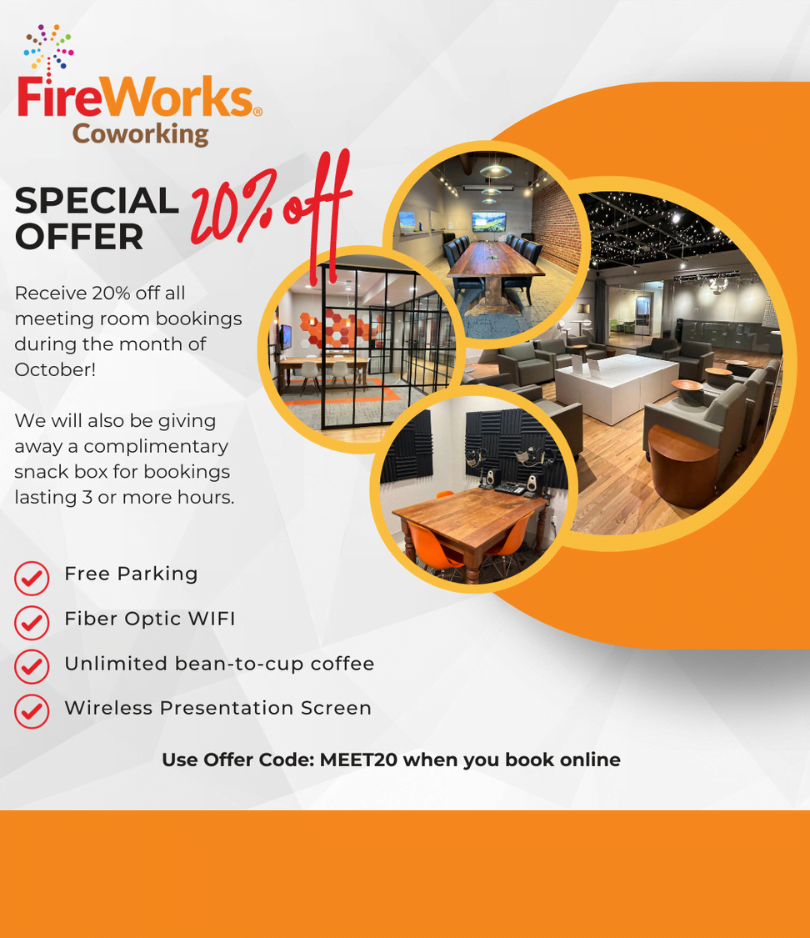
At a certain point, most remote professionals stop looking for a place that’s simply “good enough” and start looking for something that actually supports how they work day to day. That’s usually where coworking spaces like FireWorks Coworking start to make more sense.
It’s not the cheapest option, and it’s not meant to be. But it’s one of the few environments that’s intentionally designed to solve the exact problems that tend to show up when you’re working from home, coffee shops, or libraries long term. Instead of adapting to your environment, the environment is built around you.
You have reliable WiFi, a comfortable place to sit, and the ability to take calls without overthinking it. There’s a natural separation between work and home again, which helps bring structure back to your day without feeling rigid. And when you need to meet with someone, you’re not scrambling to figure out where to go or how to make it work.
Just as important, you’re no longer working in isolation. You’re around other people who are also there to focus, which creates a different kind of energy. Not distracting, just enough to keep you engaged and moving. Remote work isn’t going anywhere. Today, only about one in five workers is fully on-site, while the rest are either remote or hybrid (Gallup). That means more people are actively figuring out where they actually do their best work, not just where they can work. For a lot of people in Marietta, coworking ends up being the middle ground they didn’t realize they needed.It keeps the flexibility of remote work, but adds back the consistency, structure, and separation that tend to get lost over time.
Best for: Full workdays, meetings, consistency, professional routines
Biggest hesitation: Cost (often offset by productivity, time saved, and fewer daily frustrations)
How to Choose the Right Place to Work
Once you start to notice the tradeoffs in each environment, the question becomes more practical. What does your day actually require?
Some days are lighter. You’re answering emails, handling small tasks, maybe clearing out your inbox or catching up on admin work. On those days, a coffee shop is usually enough. You get a change of scenery without needing much from the environment.
Other days call for focus. If you need uninterrupted time to read, write, or think clearly, a library gives you that structure. It’s quiet, predictable, and removes most distractions without asking much from you. But then there are the days that don’t fit neatly into either of those.
Days with back-to-back calls. Deadlines that require sustained focus. Meetings that can’t be taken from a noisy corner or a shared quiet space. That’s where those environments start to fall short, not because they’re bad, but because they weren’t designed for that kind of work.
A simple way to think about it:
Casual, flexible work: Coffee shop
Quiet, focused work: Library
Structured, consistent work: Coworking space
A More Consistent Way to Work in Marietta
Over time, the question tends to shift. It’s no longer just about what works for today. It becomes about what works consistently across an entire week. What starts as flexibility can begin to feel unpredictable. One day is productive, the next is scattered. Some environments work well for a few hours, but not for a full day. And gradually, more of your time goes into adjusting your environment instead of actually working. That’s usually the point where people start looking for something more reliable.
FireWorks Coworking is located just off Marietta Square and was built around that idea. It gives you a place to show up, settle in, take calls when you need to, meet with clients without second-guessing it, and leave at the end of the day without carrying your work into everything else. If you’ve been rotating between different places and starting to feel the friction of that, this is usually where trying something more consistent starts to make sense.
You can always stop by for a tour or grab a day pass and see how it fits into your routine. At the end of the day, remote work isn’t just about having options. It’s about knowing which ones actually support how you work. Marietta gives you plenty of places to choose from, but the difference shows up in how your day feels once you’re there. When you find a space that makes it easier to focus, easier to stay consistent, and easier to step away at the end of the day, everything else tends to fall into place.