Most people do not start looking for coworking because they are bored.
They start looking because something in their current work setup quietly stopped working.
Maybe your internet drops at the worst possible moments. Maybe your house feels louder than it used to, even if nothing has technically changed. Maybe the line between work and home has blurred so much that it feels like you are always on and never fully present.
If you work remotely, create for a living, or recently moved to a new area like Marietta, these moments can creep up slowly. One day you realize you are less focused, more tired, and strangely disconnected from your work, even though you are doing it from the same place every day.
Coworking often enters the conversation at that point. Not as a bold decision, but as a question. Could this work better than what I am doing now?
The answer is not always yes. And that is okay.
The purpose of this guide is not to convince you that coworking is the right choice, but to help you understand whether it solves the specific problems you are experiencing. When you know that, the decision becomes much clearer.
What problem are you actually trying to solve?
Before deciding whether coworking makes sense, it helps to name what is not working.
For many remote workers, the issue is not productivity. It is reliability. Stable internet, consistent power, and a professional environment are hard to replicate at home, especially when you share space with other people, pets, or unpredictable schedules.
For creatives, the challenge is often mental rather than logistical. When your home becomes your office, it becomes difficult to turn work off. Projects linger in your head long after the laptop is closed. Without physical separation, rest never quite feels earned.
For others, the issue is isolation. Working alone day after day can quietly wear on motivation and perspective. Even people who value independence can miss the subtle energy of being around others who are also working toward something.
Coworking does not exist to fix every work problem. It exists to address these specific gaps. Reliability. Boundaries. Human presence without obligation. If those are the things you are missing, coworking may be worth exploring.
What coworking actually offers in practice
At its best, coworking provides a structured community environment with an emphasis on flexibility.
You gain access to a workspace designed for focus, not multitasking between home responsibilities. You step into a setting where work is the default activity, which often makes it easier to settle into your day.
Coworking also creates a clear start and end to the workday. Leaving your home to work and returning when you are finished can restore a rhythm that many people did not realize they lost. Over time, this separation can reduce burnout and make work feel more contained.
Another key element is proximity to others without pressure. You are not expected to collaborate or network constantly. You are simply sharing space with people who are also working. That presence alone can create a sense of accountability and connection without demanding your energy.
What coworking does not offer is complete control over your environment. Shared spaces have movement, sound, and activity. Even in quieter areas, you are part of a living workspace. That tradeoff matters when deciding whether coworking aligns with how you work best.
How to tell if coworking fits your work style
Rather than thinking in job titles, it helps to think in patterns.
Coworking tends to work well for people who want structure but still value flexibility. If you like having a place to go that signals work mode without committing to a long term lease, that is a strong indicator.
It is also a good fit if you find that your productivity improves when you are not alone. This does not mean you want constant interaction. Many people simply work better when there is gentle activity around them.
If you crave clearer boundaries between work and personal life, coworking can help reinforce those lines. The act of leaving a workspace at the end of the day can make it easier to mentally disconnect, even if your work itself is demanding.
For people new to a city, coworking can also provide familiarity. Seeing the same faces, learning the rhythm of a place, and feeling connected to a local community can ease the transition without forcing social engagement.
If these patterns resonate, coworking is likely worth a closer look.
Clearing up common misconceptions
One of the most common assumptions about coworking is that it all feels the same. Large corporate spaces often shape that perception, leading people to believe coworking is impersonal or transactional.
In reality, most coworking spaces are independently owned and deeply tied to their communities. They are shaped by the people who run them and the people who work there. This shows up in how members are welcomed, how events are hosted, and how relationships develop over time.
Another misconception is that coworking is simply office rental with a different label. While private offices are part of many spaces, coworking environments typically offer a mix of open seating, meeting rooms, shared amenities, and community support. The goal is not just to provide space, but to create an environment where work feels sustainable.
Understanding these differences helps set realistic expectations and allows you to evaluate spaces based on what actually matters to you.
The benefits people often do not anticipate
Many people walk into coworking expecting practical improvements and leave noticing emotional ones.
Focus often improves without conscious effort. Being in a space designed for work removes small decisions and distractions that drain energy throughout the day.
Routine becomes easier to maintain. Arriving at a workspace and settling in at a consistent time creates momentum. Over time, workdays can feel lighter, even when responsibilities remain the same.
Casual conversations also play a role. These interactions are rarely formal or intrusive, but they can spark ideas, offer perspective, or simply break up the day in a meaningful way.
Perhaps most importantly, many people report that work feels less heavy. Not because the work changes, but because the environment supports it.
These benefits are not guaranteed, but they are common enough to be worth considering.
When coworking may not be the right choice
As helpful as coworking can be, it is not designed for every work style.
If you need complete silence throughout the entire day, shared environments may feel distracting. Even the quietest coworking spaces have movement and background activity.
If cost is your primary concern, coworking may not align with your priorities. While it often replaces multiple expenses at once, it is not intended to be the cheapest possible solution.
Coworking also may not be a good fit if shared spaces feel draining rather than energizing. Many spaces are intentionally alive, with light music, events, and interaction as part of creating a welcoming atmosphere. If a library like environment is essential to you, coworking may feel misaligned.
Acknowledging these realities does not diminish the value of coworking. It simply helps you make a more informed choice.
Deciding without pressure
Choosing a workspace does not have to be a commitment you make on paper.
Coworking is experiential. You can read about it, compare options, and weigh pros and cons, but you will not know how it feels until you experience it.
If you are curious but unsure, the lowest pressure next step is to spend a day in a space that reflects what you are looking for. Notice how you focus. Pay attention to your energy levels. See how the environment fits into your routine.
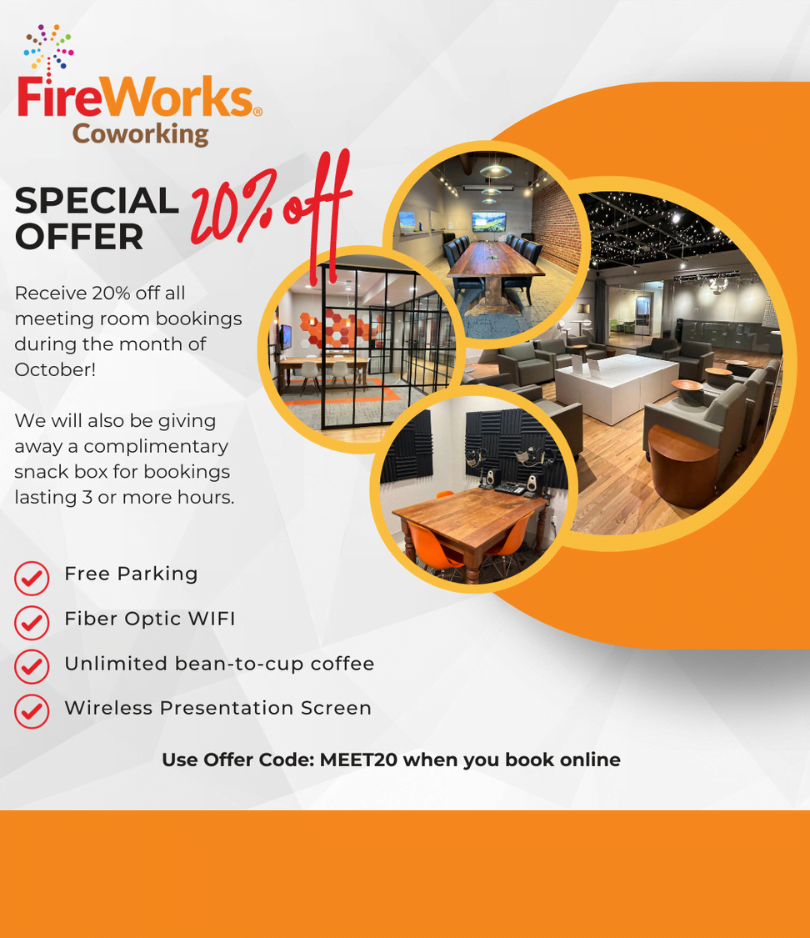
If you are in or near Marietta and want to explore this firsthand, FireWorks Coworking offers tours and day passes designed to help people test whether coworking supports the boundaries and connections they are looking for.
Sometimes one day is all it takes to know.